

Last updated: March 2026
Is your email marketing truly GDPR complaint?
Your email marketing is running smoothly. Your automation flows are set up. Your open rates are okay-ish. And then someone from legal (or your DPO) drops that one “friendly” question:
“Where is our data actually stored… and can the US access it?”
Welcome to the world of GDPR, Schrems II, SCCs, and the Data Privacy Framework, it sounds like a festival line-up, but in practice, it feels more like a mountain of paperwork.
In this blog, you’ll get:
- A brief explanation of the “why” (without it turning into a court report).
- A practical checklist to measure your risks.
- What you can do if your tooling currently runs (partially) outside the EEA.
Imagine: you send out neat newsletters every week, your opt-ins are perfectly managed, and you think: everything’s fine, right?
But then it turns out that your customers’ personal data (or students, members, donors: pick your audience) has been flowing to servers in the United States all along. Consequently: falling below the protection standards that European legislation aims to uphold.
Unfortunately, this isn’t a hypothetical scenario. For many organisations, this is a daily reality, especially if you work with platforms like Mailchimp or similar American tools. Furthermore, Data Protection Authorities are keeping an increasingly close eye on international data transfers. The question isn’t if this affects you, but when.
And yes, the stakes are high. In 2025, an average of 443 data breaches per day were reported to European regulators (a 22% increase from the previous year). Total GDPR fines in 2025 surpassed the €1.2 billion mark, with “insufficient legal basis for processing” (hello, email marketing) appearing remarkably often. [Source: SecurityWall GDPR Fines Tracker 2026, February 2026]
Schrems II: The turning point that changed everything
In July 2020, the European Court of Justice struck down the EU-US Privacy Shield. The reason? US legislation (such as FISA 702 and Executive Order 12.333) can allow American intelligence services access to the data of non-US citizens, without the safeguards that the GDPR is designed to provide to EU citizens. [Source: CJEU Case C-311/18, Schrems II, 16 July 2020]
Want to stay updated on GDPR/ePrivacy & email marketing?
Leave your email address and we’ll send you occasional short updates when there are relevant changes (such as CNIL guidelines or new EU rulings). No spam, just clarity.
What this means for you: are you working with a (partially) American platform? Then there’s a high chance you are processing personal data based on a legal foundation that is… let’s just say: on shaky ground.
Even if you use Standard Contractual Clauses (SCCs), you are obliged as a data controller to perform a Transfer Impact Assessment (TIA). This is essentially a legal reality check: can you demonstrate that the level of protection in the receiving country is comparable to the EU? In practice, this proves to be a tough nut to crack for many organisations.
Regulators aren’t “only focused on the big players” either. In February 2026, the Dutch DPA fined ten Dutch municipalities €250,000 for illegal processing of sensitive personal data without a valid legal basis or transparency. [Source: SecurityWall GDPR Fines Tracker 2026, February 2026]
The Data Privacy Framework doesn’t (fully) solve the problem
In July 2023, the European Commission approved the EU-US Data Privacy Framework (DPF) as the successor to the Privacy Shield. [Source: Europese Commissie adequaatheidsbesluit, 10 July 2023]
Sounds like “problem solved, back to business as usual,” right? Except the reality is more nuanced. Privacy experts and organisations like NOYB are already challenging the DPF in court.
For instance, on 31 October 2025, French politician Philippe Latombe appealed to the European Court of Justice to challenge the DPF. At stake: the independence of legal remedies (Data Protection Review Court), the scope of surveillance, and the level of protection compared to EU standards. [Source: WilmerHale Privacy and Cybersecurity Law Blog, 1 December 2025]
In December 2025, Max Schrems (NOYB) highlighted three acute risks for EU-US data transfers:
- The US Supreme Court case Trump v. Slaughter (ruling expected June–July 2026), which could affect the independence of the FTC (a key element in the DPF).
- Potential constitutional challenges regarding the Data Protection Review Court.
- The risk that Executive Order 14.086 could be revoked.
NOYB explicitly advises organisations to prepare urgently and limit transfers to US providers where you have control over European personal data. [Source:NOYB, 10 December 2025]
Organisations that base their compliance solely on the DPF are once again building on legal quicksand.”
The Data Protection Authority therefore advises, wherever possible, choosing solutions where data is processed exclusively within the European Economic Area (EEA). That is the only advice that is truly future-proof. [Source: Autoriteit Persoonsgegevens richtlijnen internationale doorgifte]
Three steps to genuine email compliance
Enough theory, time for something actionable. Here is how you tackle this today.
Step 1: Map your risks
Start with an honest audit of all tools that process personal data:
- Which email marketing platforms process your contacts’ data?
- Where is that data physically stored: in the EU/EEA or outside?
- Do you have a valid GDPR basis for email marketing (such as explicit consent)?
- Are data processing agreements in place that safeguard European privacy standards?
Note: In 2026, regulators are placing extra focus on transparency. On 14 October 2025, the European Data Protection Board (EDPB) announced that the coordinated enforcement action of 2026 will specifically target transparency and information obligations under GDPR Articles 12–14.
This means national regulators can send questionnaires (mandatory or voluntary), and investigations could lead to warnings, compliance orders, or fines. [Source: Inside Privacy (Covington & Burling LLP), 31 October 2025]
Step 2: Evaluate your migration options
Is your data (partially) outside the EEA? Then you shouldn’t wait too long. When choosing an alternative, look for:
- European jurisdiction: The provider falls entirely under European law.
- No DPF dependency: Compliance is not built on a legally vulnerable agreement.
- Demonstrable certifications such as ISO 27001 for information security.
- A solid data processing agreement that truly guarantees European privacy standards.
Step 3: Choose a platform that offers real certainty
This is where it often goes wrong: organisations switch, but don’t properly check where the data goes (or can go). Select a partner that views data sovereignty not as an “extra” but as a foundation.
Compare European email marketing platforms for your organisation
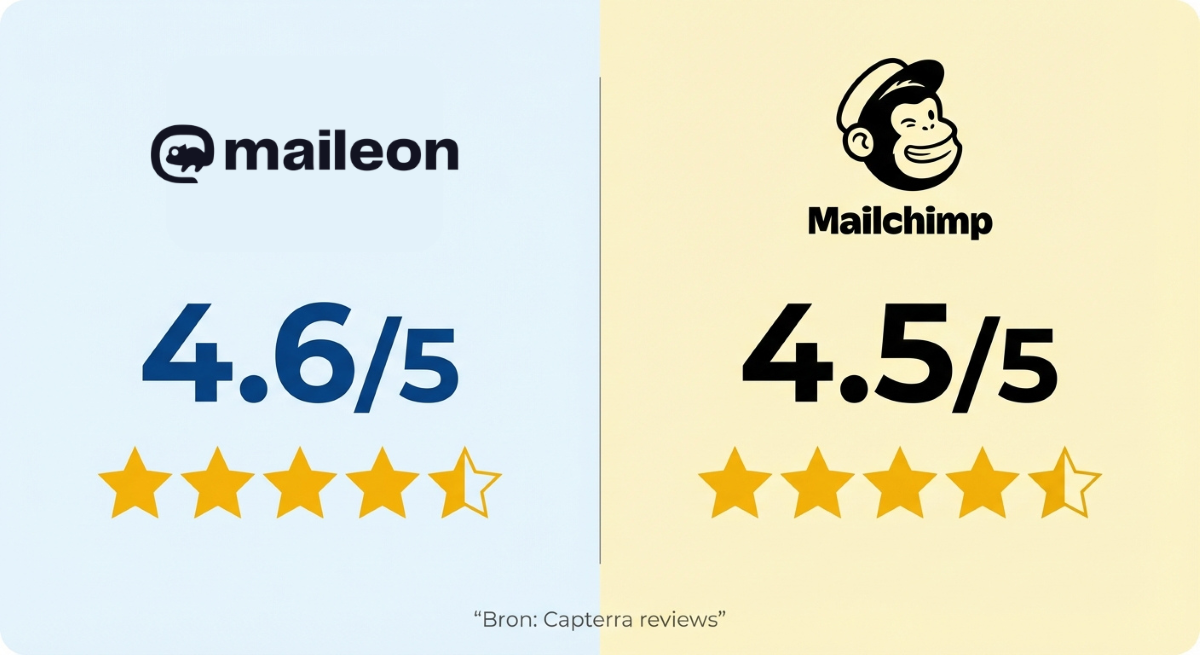
Maileon: European certainty, local support
If you are serious about GDPR compliance, Maileon deserves a serious look. Maileon is built on German technology, with data storage exclusively within the EEA. This means: no transfers to the US, no exposure to FISA 702, and (in many cases) no mandatory TIA headaches to justify your email marketing.
What specifically sets Maileon apart:
- All personal data is stored on servers within the European Economic Area.
- ISO 27001-certified infrastructure for maximum information security.
- A local team that helps you with GDPR setup (without the jargon bingo).
- Support when switching from platforms like Mailchimp, often operational within fourteen days.
Switching doesn’t have to be a mega-project. With the right guidance, your email marketing can be compliant, secure, and future-proof in no time. And let’s be honest: if you can choose between “a complicated TIA” and “simply ensuring the data stays in the EEA”… option two is usually the best bet.
The question isn’t if you tackle this, but when
GDPR fines can reach €20 million or 4% of annual global turnover (whichever is higher). But the real damage often lies in loss of reputation and customer trust and that is much harder to fix than a subject line.
The most robust approach is processing data exclusively within the EEA: not dependent on political agreements, but anchored in European law.
The solution is within reach: start with your risk assessment, make an informed choice for a European platform, and give your contacts the privacy protection they deserve. Because building trust starts with the choices you make today.
Which email marketing tool are you using now, and have you already performed a Transfer Impact Assessment?
Free Mailchimp migration
Want to reduce the GDPR risk of trans-Atlantic data transfers without having to rebuild your entire email programme? At Maileon, we help you with a free Mailchimp migration: from list import to basic setup, so you can get back to sending quickly but with your data in Europe.
You might also like
-
How to Recognize Phishing Emails Pretending to Be Maileon
How to Recognize Phishing Emails Pretending to Be Maileon
-
Is your email marketing truly GDPR complaint?
The solution is right at your fingertips: opt for a European platform and provide your contacts with the privacy protection they deserve.
-
Is Mailchimp still GDPR-proof in 2026?
Discover whether organisations in the Netherlands (and Europe) can still use Mailchimp without running unnecessary GDPR risks in 2026.

Looking to grow your business?
Book a demo with our specialists to get a complete look of the marketing automation platform that can match your ambitions.
